


Nursing Skills for Internationally Educated Nurses
A successful transition into Canadian practice is not only about what you know. It is about applying nursing skills for internationally educated nurses within a new clinical system, communicating clearly with an interdisciplinary team, documenting decisions, and recognizing when to escalate concerns. These are practical habits that protect patients and help nurses enter the workplace with confidence.
Internationally educated nurses often arrive with substantial education and valuable bedside experience. The adjustment lies in adapting those strengths to local standards, workflows, technology, and expectations around accountability. Focused skills preparation can turn uncertainty into a clear, repeatable approach to patient care.
Why Clinical Readiness Requires More Than a Skills Check
A skills assessment may confirm that you can complete a procedure. Workplace readiness asks more: Can you prepare the patient, explain the procedure, assess for risks, document accurately, respond to an unexpected change, and communicate the outcome to the appropriate provider?
In Canadian clinical settings, nurses are expected to combine technical performance with ongoing assessment and sound clinical judgment. A medication administration task, for example, includes verifying orders, checking allergies, completing required calculations, identifying contraindications, monitoring the patient’s response, and documenting the care provided. The injection itself is only one part of the responsibility.
Local expectations also vary by employer, unit, provincial scope of practice, and patient population. A long-term care setting, medical unit, emergency department, and pediatric service each require different priorities. Preparation should therefore build core skills first, then connect them to the setting where you plan to work.
Nursing Skills for Internationally Educated Nurses: Core Priorities
The most useful preparation focuses on the procedures and clinical behaviors that appear regularly in nursing practice. Technical repetition matters, but the goal is not to perform a task mechanically. The goal is safe, patient-centered performance from preparation through follow-up.
Head-to-Toe Assessment and Early Recognition
A structured assessment helps nurses identify what is normal for a patient and what needs attention now. Practice taking vital signs manually and with electronic equipment, completing focused respiratory, cardiovascular, neurological, abdominal, skin, and pain assessments, and recognizing trends rather than isolated numbers.
A blood pressure of 92/58 may be expected for one patient and concerning for another. Context matters: recent surgery, bleeding risk, level of consciousness, urine output, medication history, baseline status, and changes from prior assessments all affect the next step. Develop the habit of asking, “What has changed, and what could this mean?”
When findings are concerning, escalation should be timely and organized. Be ready to report the patient’s situation, relevant background, your assessment, and the support or direction you need. This structure helps the receiving clinician quickly understand the concern and act appropriately.
Medication Safety and Calculations
Medication administration is a high-stakes nursing responsibility. Internationally educated nurses should be comfortable interpreting medication orders, performing dosage calculations, using the rights of medication administration, confirming patient identity, and documenting according to organizational policy.
Training should include oral, subcutaneous, intramuscular, topical, inhaled, and intravenous medications, along with insulin and anticoagulant safety principles where relevant. Intravenous medication practice should cover compatibility, line assessment, infusion rates, site monitoring, and the response to infiltration, phlebitis, or an adverse reaction.
Do not treat a calculation as correct merely because the arithmetic is complete. Check whether the dose is reasonable for the patient’s age, weight, condition, and prescribed indication. If an order is unclear or appears unsafe, pause and follow the appropriate chain of communication. Speaking up is part of safe practice.
Infection Prevention and Aseptic Technique
Hand hygiene, personal protective equipment, and clean or sterile technique are foundational in every setting. Yet these practices are not simply a checklist. They require an understanding of transmission risks, isolation precautions, specimen handling, and equipment cleaning.
For invasive procedures, prepare your workspace before beginning. Confirm you have the necessary supplies, protect the sterile field, minimize interruptions, and know what to do if sterility is compromised. A calm, organized setup reduces errors and supports patient confidence.
Wound Care, Tubes, and Common Bedside Procedures
Many entry-to-practice and orientation environments expect nurses to perform or assist with wound assessment and dressing changes, urinary catheter care, nasogastric tube care, enteral feeding, ostomy care, blood glucose monitoring, and specimen collection.
For each skill, learn the clinical reasoning behind the steps. During wound care, assess location, size, drainage, odor, surrounding skin, pain, and signs of infection. With enteral feeding, verify the order, assess tube placement according to policy, consider aspiration risk, monitor tolerance, and document the intervention. Accurate observations are often as valuable as task completion.
Communication Is a Clinical Skill
Clear communication is central to patient safety, especially during handoffs, transfers, changes in condition, and urgent events. Nurses must communicate with patients and families in plain language while also sharing concise clinical information with physicians, pharmacists, respiratory therapists, and fellow nurses.
Charting is part of that communication. Documentation should be factual, timely, complete, and connected to your assessment and actions. Avoid vague statements such as “patient doing okay.” Instead, document the relevant assessment findings, intervention, patient response, education provided, and any notifications or follow-up plans.
Patient advocacy can feel different in a new healthcare culture. In practice, it means respectfully raising a concern, seeking clarification when a plan is unclear, and ensuring the patient’s wishes, capacity, comfort, and safety are considered. You do not need to have every answer before escalating a concern. You need to recognize when the patient requires attention.
Build Confidence for High-Acuity Situations
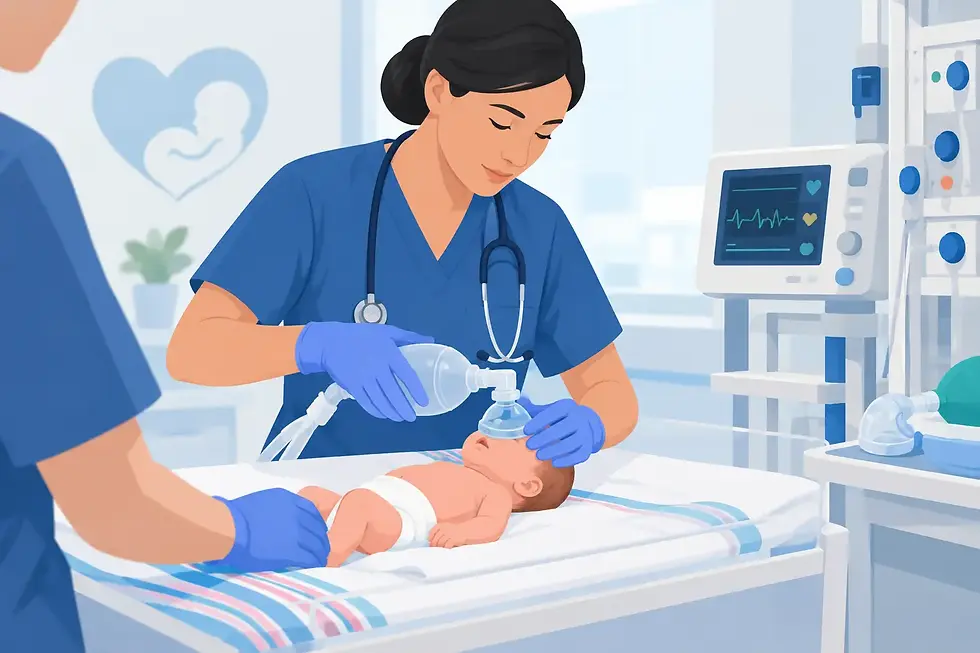
Even nurses who do not work in emergency care may encounter a deteriorating patient. Basic life support, early recognition of respiratory distress, oxygen delivery devices, safe patient positioning, emergency equipment awareness, and rapid-response communication are useful across many care settings.
The level of advanced preparation depends on your role and workplace. A nurse preparing for acute care may benefit from additional ECG, airway, resuscitation, trauma, pediatric, or neonatal education. A nurse entering community or long-term care may place greater emphasis on chronic disease management, falls prevention, skin integrity, medication safety, and family communication.
There is a trade-off between taking every available course and selecting education that supports your immediate goal. Start with mandatory credentials and the clinical areas identified in your assessment, orientation plan, or target job description. Then add specialty training as your role develops.
Make Practice Deliberate, Not Passive
Reading a procedure and watching a demonstration are useful starting points, but hands-on practice is where technique becomes dependable. Use simulation or skills lab time to repeat common procedures, receive feedback, correct small errors, and practice explaining what you are doing to the patient.
Before a practice session, identify one or two goals. You may want to improve sterile-field organization, IV medication calculations, documentation language, or your verbal handoff. Afterward, ask what you did well, where you hesitated, and what you would do differently next time. This approach builds progress faster than trying to perfect everything at once.
It also helps to practice under realistic conditions. Set up equipment, follow a sequence, use an assessment framework, document the result, and give a short report. Clinical work rarely happens as an isolated procedure, so your preparation should reflect the full workflow.
Prepare for Orientation and Employment
Employers expect new staff to learn site-specific policies, electronic documentation systems, equipment, and medication processes during orientation. Arrive prepared to ask questions, seek feedback, and use available resources. Confidence is not pretending to know a policy you have not learned. Confidence is knowing how to verify information and obtain help before patient safety is affected.
Keep a personal learning plan that includes skills you have practiced, areas requiring supervision, required certifications, and questions to discuss with an educator or preceptor. This gives your development structure and makes it easier to track improvement over time.
Beats and Breaths Academy supports internationally educated nurses with practical nursing-skills preparation designed to strengthen hands-on ability, clinical communication, and readiness for Canadian healthcare environments.
Your experience has already given you a foundation. Build on it one skill, one patient scenario, and one well-supported clinical decision at a time. The confidence you gain will show not only in your performance, but also in the safe, reassuring care your patients receive.


Comments